What a Commercial Roof Inspection Actually Covers
Most commercial building owners don't think about their roof until something goes wrong. By then, what could have been a minor fix has turned into a much bigger repair - and a much bigger bill. That's exactly why routine inspections matter.
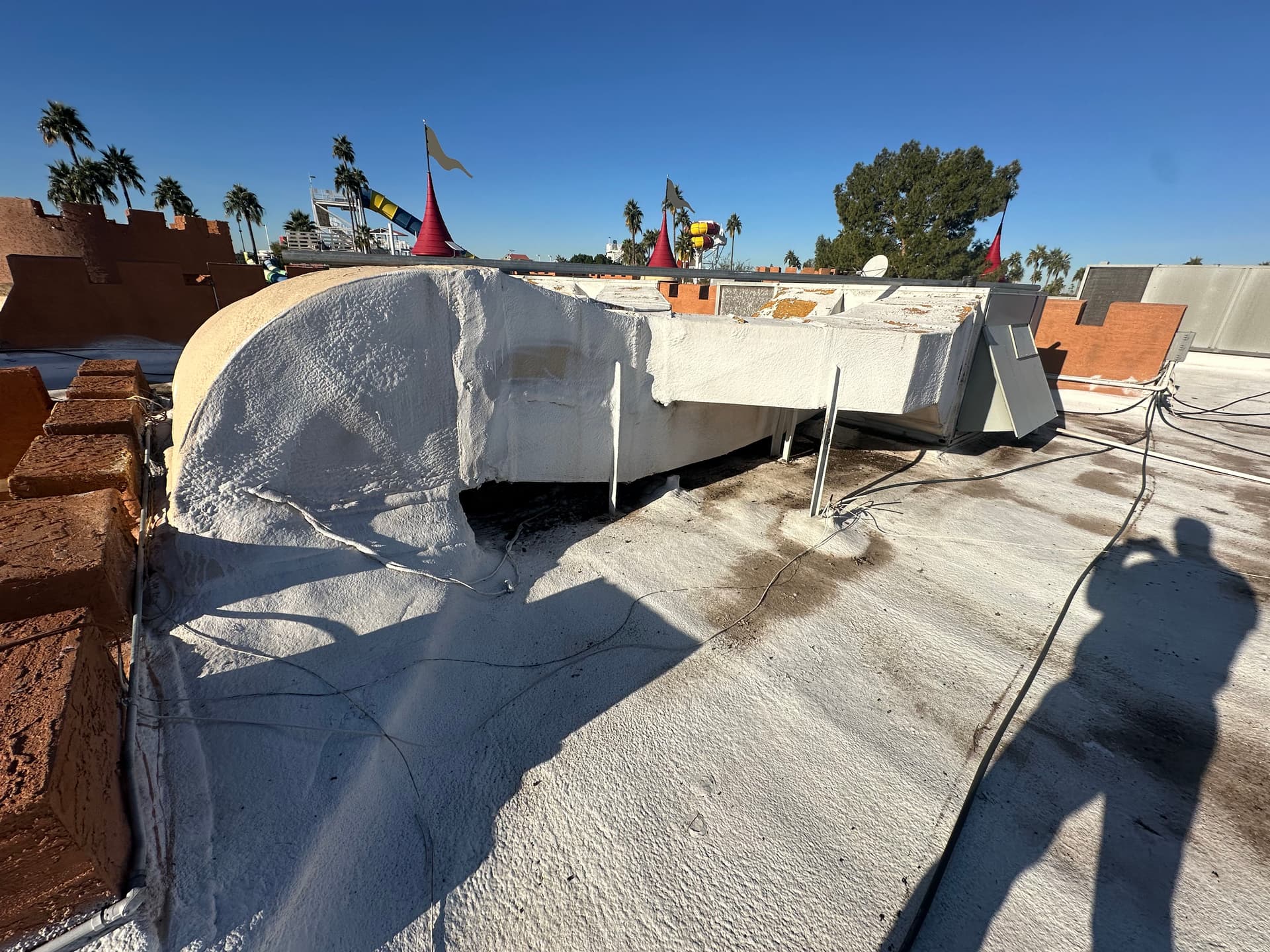
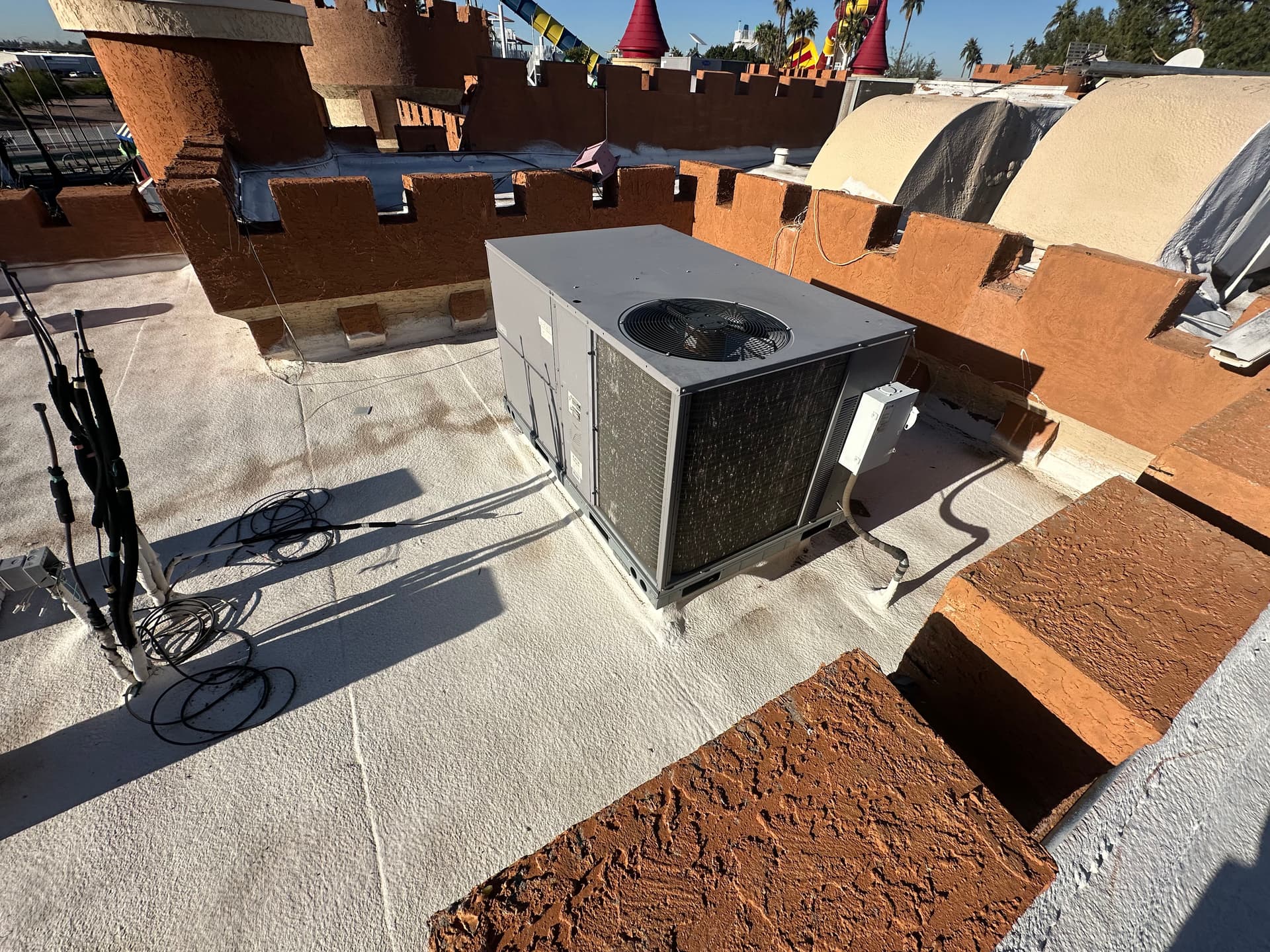
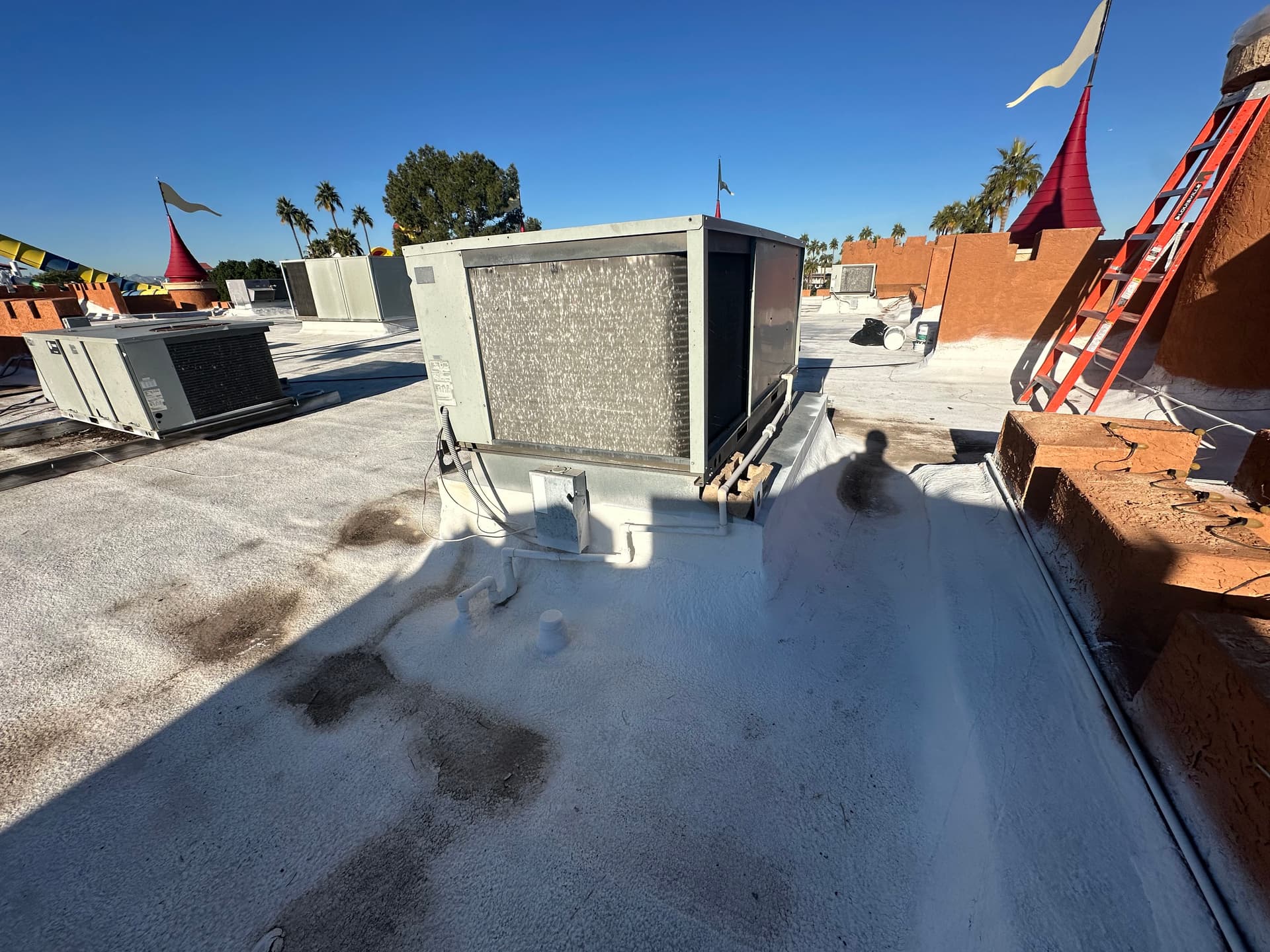
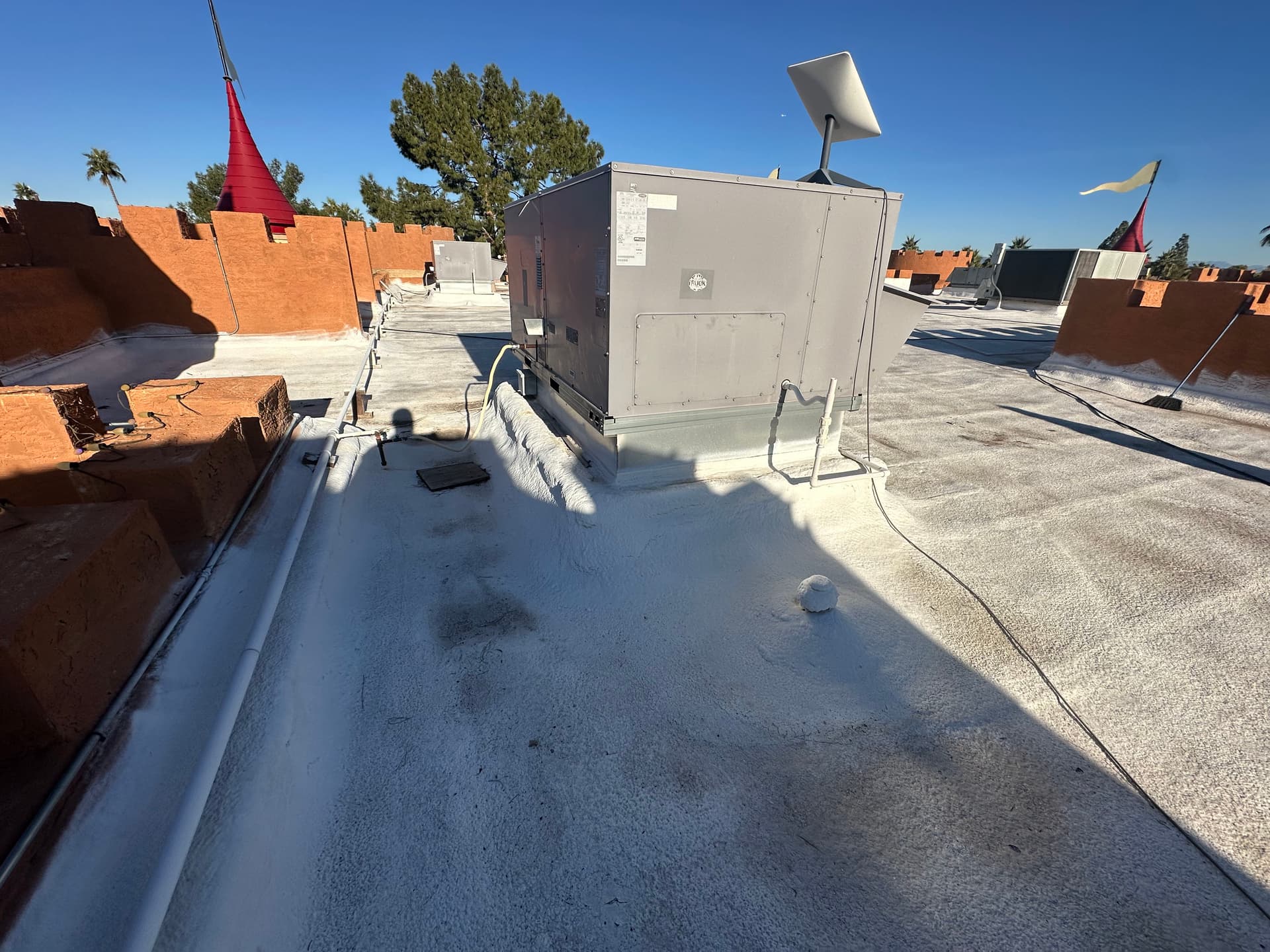
When we get up on a flat roof like this, we're not just doing a quick walkthrough. We're checking every detail - the condition of the roof coating, how water is moving (or not moving) across the surface, and how the roof is holding up around the HVAC units. Those units create penetrations, vibration, and drainage issues that need to stay ahead of.
The foam coating you see on this roof is a spray polyurethane foam system - a common and effective flat roof solution. But even the best systems need eyes on them regularly. Foam can crack, coating can wear thin, and areas around equipment curbs can start to pull away. None of that is obvious from the ground.
Drainage areas are another big one. Standing water on a flat roof is one of the fastest ways to shorten its lifespan. During an inspection, we're looking for any low spots, blocked drains, or areas where water isn't shedding the way it should.
The goal of a commercial roof inspection is simple - catch small issues before they grow. A compromised seal around an HVAC curb today could mean interior water damage next monsoon season. Staying on top of it is always cheaper than reacting to it.