Tile Refelt Job Tackles What's Hiding Under the Surface in Mesa
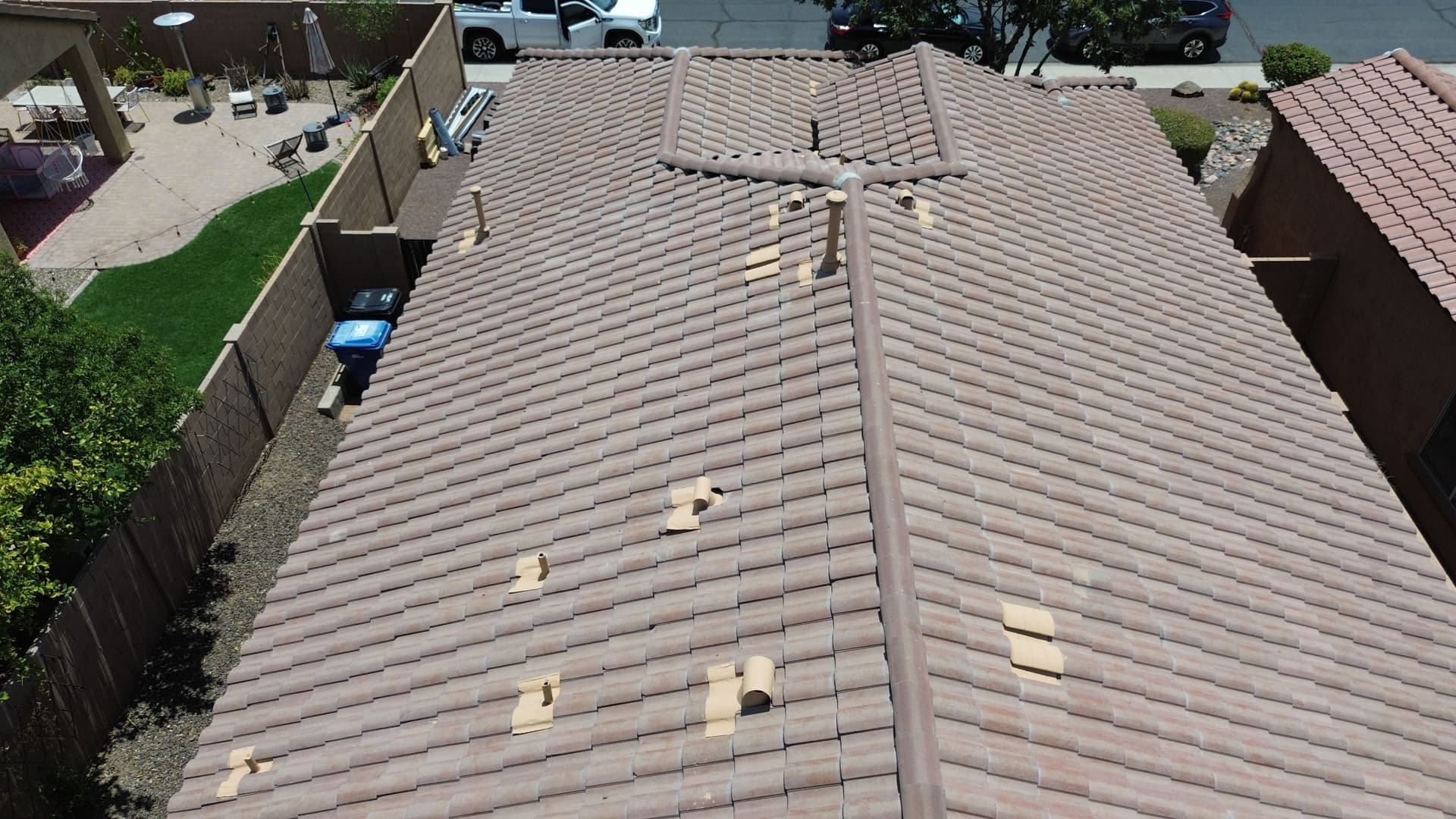
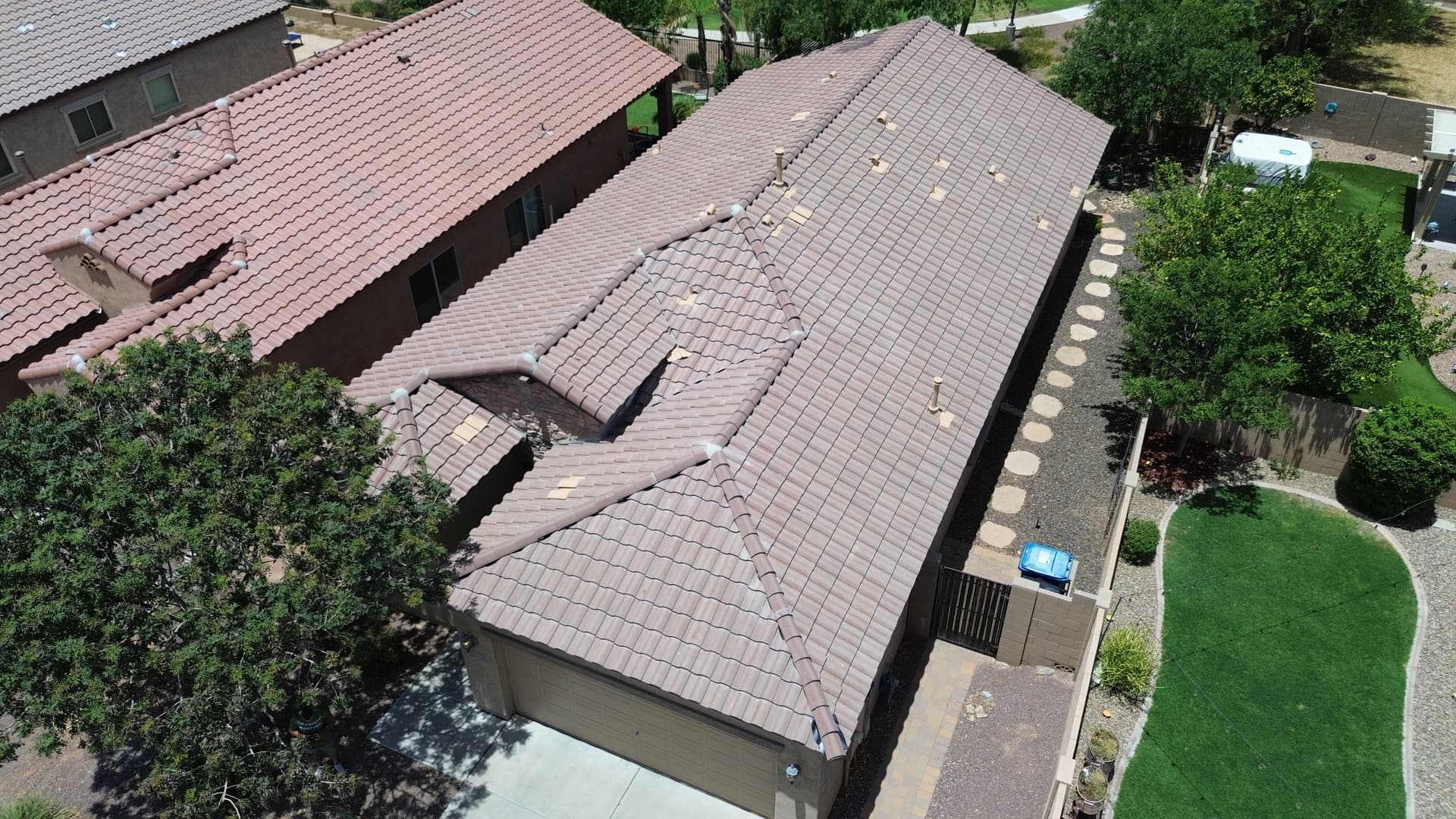
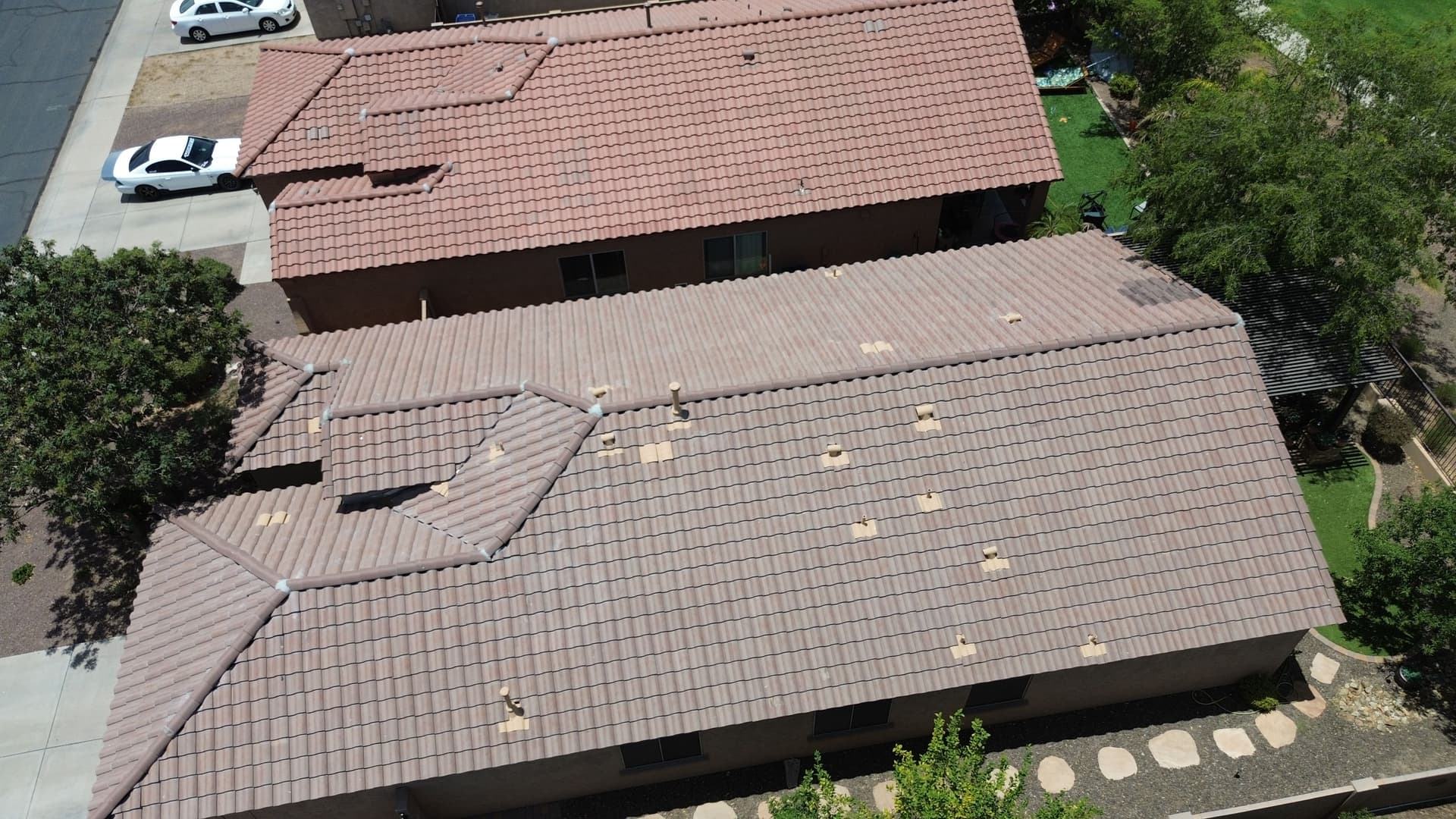
Loose or missing tiles on a tile roof are easy to spot. What's harder to see is what's going on underneath them. That's usually where the real problem lives - worn, cracked, or dried-out underlayment that's no longer doing its job. The tiles themselves might look fine from the street, but once that felt layer breaks down, water has a path in.
That's exactly what we were dealing with on this Mesa home. The tiles scattered across the roof surface told the story - underlayment that had aged past the point of doing its job. On a tile roof, the felt layer underneath is your actual waterproofing barrier. The tiles shed water and take the beating from the sun, but the underlayment is what keeps moisture out of the roof deck and your home.
A tile refelt involves carefully removing the existing tiles, pulling up the old underlayment, and installing fresh felt across the entire roof deck. It sounds like a big job because it is. But it's also the right fix when the underlayment is the problem. Patching around it doesn't work long-term - you have to address the layer that's failing.
Once the new underlayment is in place, the tiles go back down. Any cracked or broken ones get replaced in the process. What you end up with is a roof that looks the same from the outside but is fundamentally sound again underneath. That's the goal with this kind of roof repair - restore the integrity of the system without replacing everything unnecessarily.
If your tile roof is showing signs of age - tiles shifting, a few going missing after wind, or you're just not sure when it was last looked at - a roof inspection is a smart starting point. We can tell you what's going on under there before a small problem becomes a big one.