Standing Seam Metal Roof and Siding Installation in Payson AZ
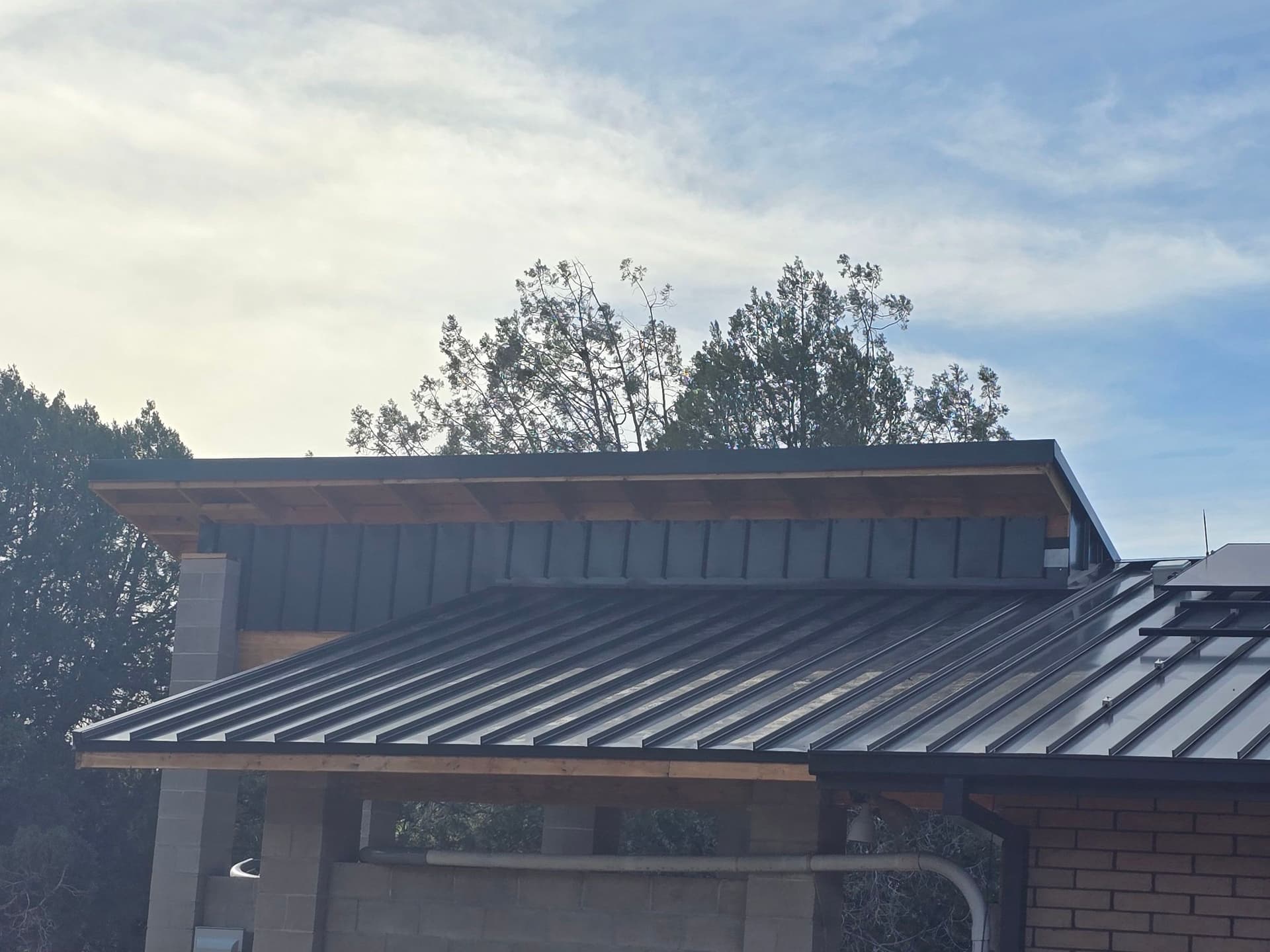
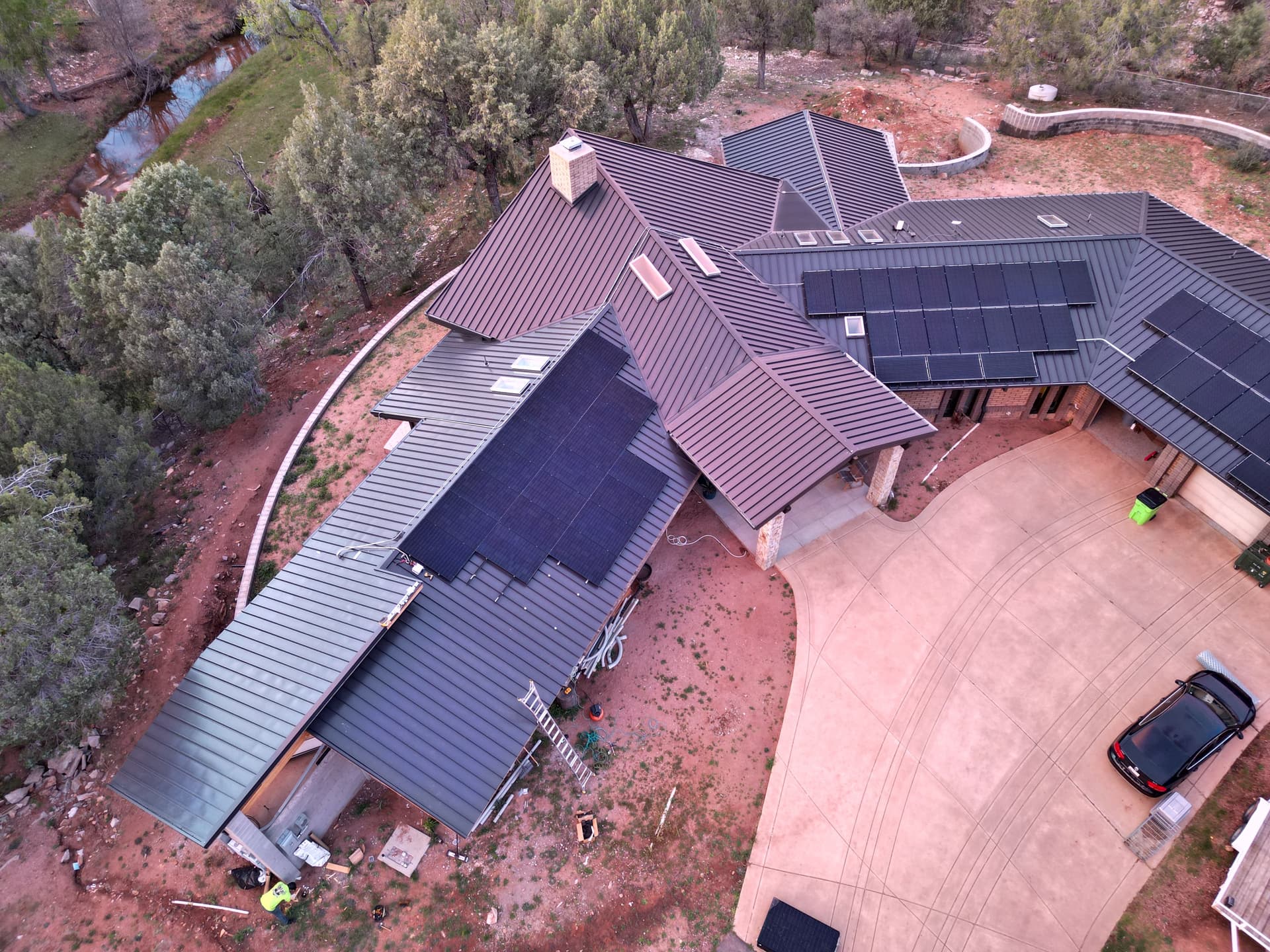
This was a big one. A modern home in the high desert of Payson, AZ needed more than just a new roof - it needed a complete metal system that could handle everything the area throws at it. Snow load, UV exposure, temperature swings. The existing structure had to be worked with, not around.
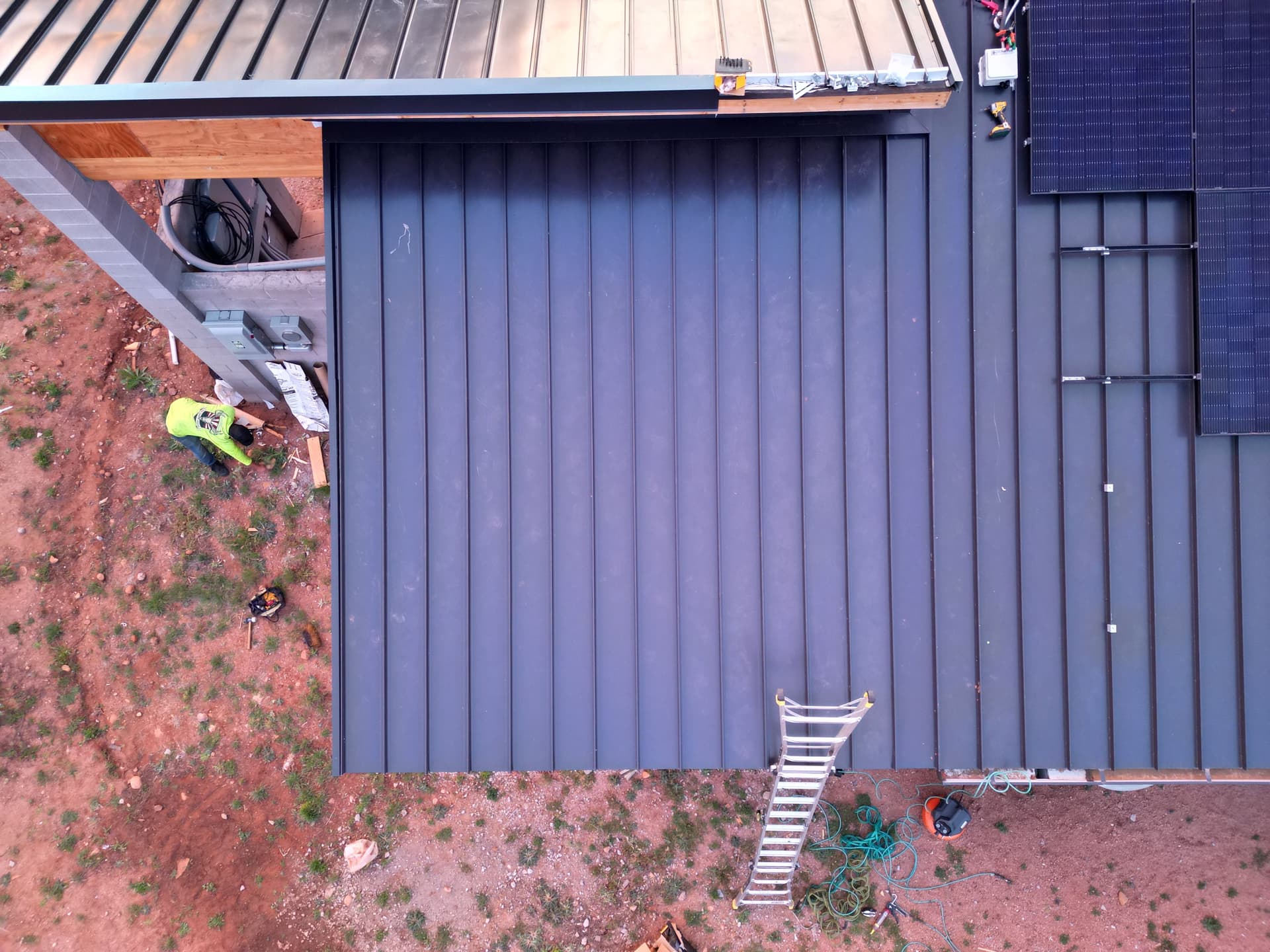
We installed standing seam metal siding on a rebuilt section and tied it directly into the existing standing seam roof. Getting that integration right matters. When new and existing metal panels meet, the seams, the pitch transitions, the flashing - all of it has to line up perfectly or you end up with leaks down the road. That's the kind of detail work that separates a clean job from a callback.
The solar panels were part of the equation too. Mounting solar on a standing seam roof is actually a strong combination - the panels clip directly to the seams without penetrating the metal, which keeps the roof watertight. It also means no drilling through your roofing material. That's a real advantage over asphalt shingles, where every solar mount is a potential leak point.
Metal roofing systems like this are a long-term investment. The standing seam profile you see here is one of the most durable options available for residential roofing - it sheds water fast, holds up under heavy snow, and doesn't require the same ongoing maintenance that other roofing materials do. For a high-altitude property like this one in Payson, that durability isn't a luxury, it's a necessity.
Projects like this don't happen without careful planning and coordination between the roofing and solar work. Getting the sequencing right - roof first, then integration, then panels - is what makes the finished system perform the way it should. We're proud of how this one came together.