Don’t Let Monsoon Storms Tear Through Your Roof — Rim Country Roofing’s Survival Guide
Learn to safeguard your roof during monsoon storms with Rim Country Roofing's essential survival guide for Arizona homeowners.
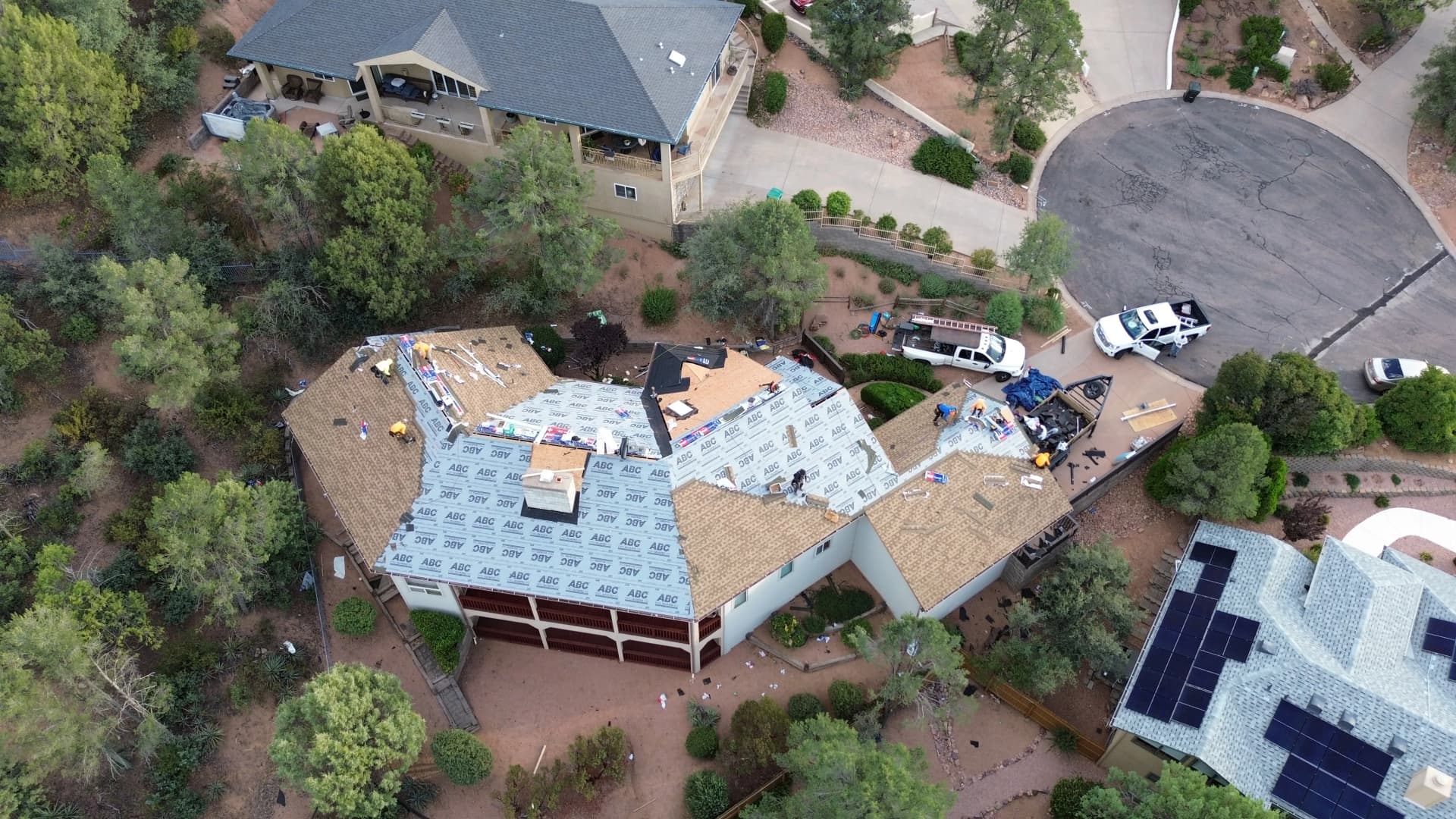
Arizona’s official monsoon season runs from June 15 through September 30. By late September the calendar is almost done, but the storms are not always finished. This year Phoenix even pushed past its normal monsoon rainfall total with a late surge — the kind of short, hard rain that finds every loose tile, tired seal, and clogged drain.
If you live in the Phoenix Valley, Payson, Strawberry, Pine, Dewey-Humboldt, or anywhere in Rim Country, that weather is not background noise. It is the annual stress test on your roof.
What monsoon storms actually do to a roof
Monsoon damage is rarely one dramatic hole. It is usually a combination of three things happening fast:
Wind. Microbursts and outflow winds can exceed 60–70 mph. That lift peels shingles, shifts concrete or clay tile, and moves flashing around chimneys, skylights, and valleys by a few millimeters. The roof can look “fine” from the driveway while the underlayment underneath is no longer sealed.
Hail and debris. Hail bruises asphalt shingles (you lose the granule layer that protects against UV). It cracks tile. Haboobs throw sand, gravel, and branches. Hairline cracks in tile are easy to miss and then wick water on the next rain.
Water that has nowhere to go. Dust from a haboob turns to mud and plugs gutters, scuppers, and flat-roof drains. Then the downpour hits. Ponding on a low-slope roof is heavy, and wind-driven rain finds every failed flashing and penetration.
On older three-tab shingles, wind ratings are often only around 60 mph. Architectural shingles, well-fastened tile, and standing-seam metal hold up better — but only if the details (flashing, underlayment, fasteners, ridges) were installed correctly in the first place.
What to check after a storm (from the ground first)
You do not need to climb the roof. Start here:
Shingle pieces, granules, or broken tile in the yard or gutters
Tiles that look shifted, cracked, or “high” on one edge
Dents or cracks on metal flashing, vents, or skylights
Sagging or staining on ceilings, especially near exterior walls and chimneys
Gutters pulled away or overflowing
New drips in the attic after the next rain (look with a flashlight, not a guess)
If you see debris in the yard, assume the roof took a hit even if the house is still dry. Hidden damage — lifted underlayment under tile, a flashing seal that cracked and sat back down — is common and is exactly what insurance adjusters look for when they decide whether a claim is “storm” or “wear and tear.”
How to monsoon-proof the roof you already have
Inspect before peak season, not after the first leak. A walk-the-roof inspection in May or early June is cheaper than an emergency tarp in July.
Clear drainage. Gutters, downspouts, scuppers, and flat-roof drains need to be open before dust season. Clogged drains turn a 30-minute storm into standing water.
Fix the small stuff. Loose ridge cap, cracked pipe boots, open nail heads, and tired caulk at walls are how sideways rain gets in.
Know your system. Tile roofs live and die by the underlayment. Shingle roofs live and die by the seal strip and flashing. Metal roofs live and die by fasteners and seams. Standing-seam metal is one of the better monsoon performers when it is detailed right — which is why we install it in Payson and across the Rim.
Document everything. Date-stamped photos before and after a storm help if you file an insurance claim. Sudden wind and hail are typically covered; deferred maintenance is not.
When to call a licensed Arizona roofer
Call if you have:
Active leaking
Missing or cracked material you can see from the ground
A roof over 15–20 years old that just took a hard storm
A recent denial or “wear and tear” letter from an insurer
A flat or low-slope roof that ponded after the last rain
Rim Country Roofing is a licensed Arizona contractor (ROC #362315). We handle inspections, storm repairs, insurance-related work, shingle and tile systems, and standing-seam metal across the Phoenix Valley and Rim Country — Payson, Strawberry, Pine, Dewey-Humboldt, Glendale, and surrounding areas. Our crew is all-American, and we stay on the phone until the job is done.
If last night’s storm left you wondering whether the roof held, don’t wait for the next cell. Get it looked at while the evidence is still obvious.
Rim Country Roofing
rimcountryroofing.com
928-585-5572
ROC #362315